






















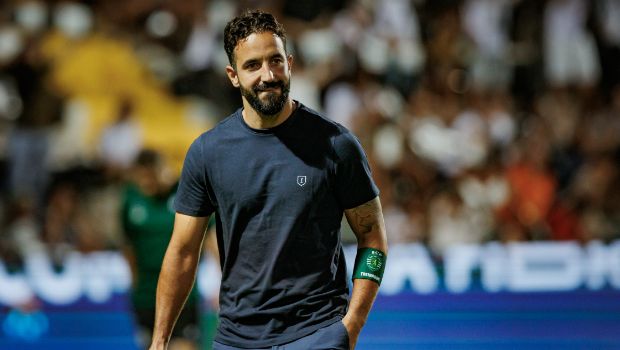
Ruben Amorim has been sacked as Manchester United head coach after just 14 months in charge, following a breakdown in relations with the club’s hierarchy and ongoing concerns over tactics and squad management.
His final match was a 1-1 Premier League draw with Leeds, leaving United sixth in the table but amid growing internal dissatisfaction with his public comments and refusal to adapt his approach.
Amorim’s tenure will be remembered for his unwavering commitment to a 3-4-3 system, a formation he had used successfully at Sporting but which proved divisive at Old Trafford.
Despite repeated external and internal calls for flexibility, the Portuguese coach consistently defended his methods, once saying even the Pope could not persuade him to change.
Club executives became increasingly frustrated when he reverted to a back three days after briefly switching to a back four in December.
Tensions escalated after a disappointing draw with Wolves, a team struggling at the bottom of the table, which saw United booed off by supporters.
Technical director Jason Wilcox privately urged Amorim to show greater tactical flexibility, advice that was not taken on board.
United continued with the same system against Leeds, further damaging Amorim’s standing with senior figures, who viewed the situation as untenable.
While results were inconsistent, many players initially remained supportive, particularly during pre-season, when Amorim’s detailed and meticulous coaching methods impressed the squad.
However, his decision to exile several senior players, including Marcus Rashford and Jadon Sancho, and his blunt public criticism of others raised concerns about squad harmony and asset management within the club.
Recruitment under Amorim also came under scrutiny. United spent more than £200m on new signings, sanctioned high-profile departures such as Rasmus Hojlund, and backed the coach’s vision despite doubts over squad fit.
However, the club blocked a proposed move for Aston Villa goalkeeper Emiliano Martinez, choosing instead to invest in younger talent, highlighting growing differences between Amorim and the club’s decision-makers.
On Monday morning at Carrington, Wilcox and chief executive Omar Berrada informed Amorim he had been relieved of his duties.
Attention now turns to United’s leadership structure, with questions being asked about the decision to appoint Amorim in the first place and whether deeper structural issues continue to undermine the club.
The search for a new head coach is under way, but many believe Manchester United’s problems extend far beyond the dugout.